Simon Curwood Jewellers already has many of the ingredients required to perform strongly online: a polished luxury brand, an extensive jewellery range, custom engagement ring expertise and a growing national retail presence.
This means the website does not need to be rebuilt from zero. The greater opportunity is to help Google understand its most important collections as clearly as customers understand the products when visiting a store.
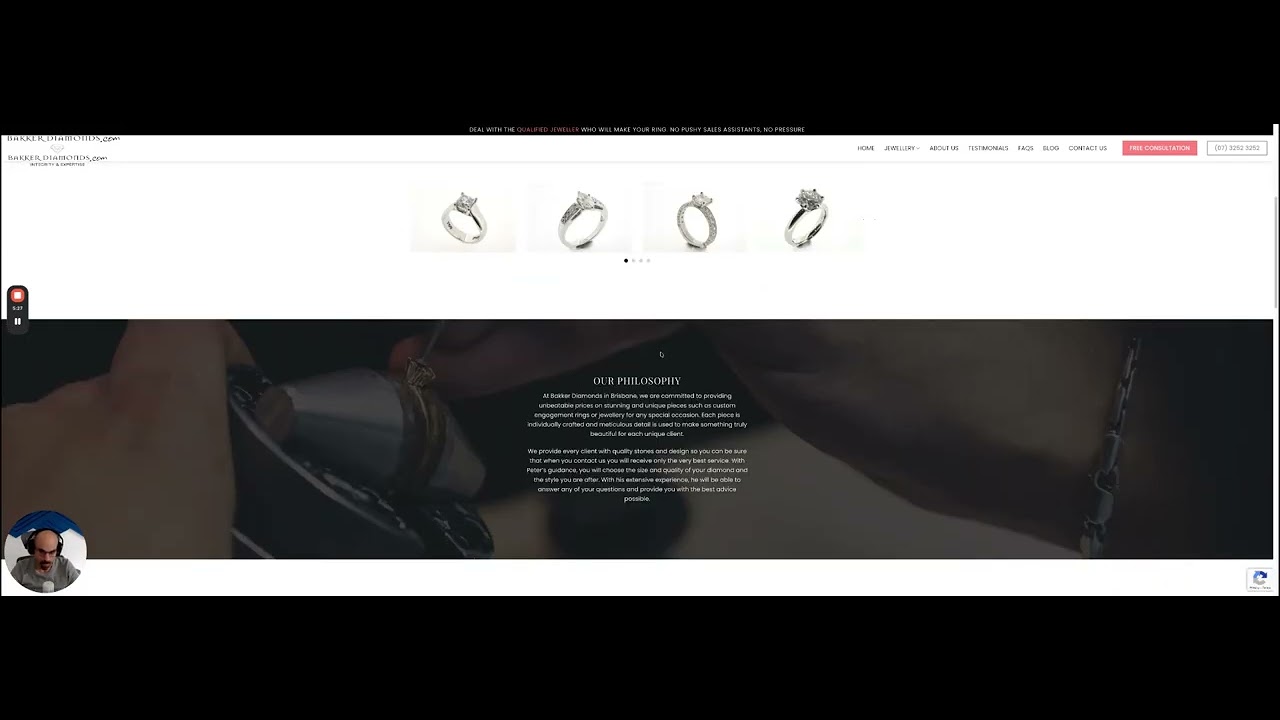
In this 12-minute jewellery SEO audit, I examine several structural, content and technical issues that could be restricting Simon Curwood’s organic search visibility.
These include broken backlinks, competing engagement ring pages, filter-generated URLs that may not function as indexable landing pages, limited collection content and an education section that covers too many different subjects on a single URL.
This is an initial strategic review rather than a complete technical SEO audit. It reflects the website as it appeared when the video was recorded, and some elements may have since been updated.
More tips you can find on our ultimate Jewellery SEO Guide Here
Jewellery websites often contain thousands of products, filters, variants and collection combinations. Shopify makes these catalogues easier to manage, but its default structures do not automatically create the strongest possible SEO architecture.
Google and AI discovery platforms need specific, crawlable pages that clearly address individual subjects. Customers also need simple navigation that takes them directly to the rings, diamonds or educational information they selected.
The central theme of this audit is therefore specificity: one clear purpose for every important page and one obvious primary destination for every valuable search topic.
These are the seven largest opportunities identified during my review.
Relevant editorial links are among the most valuable assets a jewellery website can earn. They can send qualified referral traffic while strengthening the site’s authority in Google.
During the audit, I found Simon Curwood featured in Style Magazines’ guide to Brisbane’s best wedding vendors. However, the website link associated with the listing led to a missing page at the time of recording.
That creates two avoidable losses. A potential customer may abandon the journey after reaching a 404 page, while the authority from the editorial link is not being directed to the most relevant live destination.
The ideal response is to:
Backlink reclamation can sometimes recover meaningful SEO value more quickly than earning an entirely new mention.
At the time of review, different engagement ring links led visitors to different collection URLs.
Google could access both a general engagement ring collection and an SCJ Bridal collection containing substantially similar products and messaging.
Simon Curwood also has a separate custom engagement ring service page. That page can serve a valid and distinct purpose, but the relationship between these destinations must be deliberate.
A clear structure might assign each page a separate intent:
If two collection pages serve the same generic intent, their ranking signals can become divided. Internal links, metadata and external links may point to competing URLs, leaving Google to decide which one should rank.
The preferred primary URL should be selected using product coverage, backlinks, current rankings and conversion data.
Duplicate destinations can then be consolidated using redirects, canonicals or a clearer differentiation of purpose.
Customers frequently search for engagement rings by diamond shape.
Oval, radiant, Asscher, emerald, pear, marquise, princess, cushion and round brilliant searches can each represent valuable commercial intent.
During the recorded audit, some shape selections relied on filtered URLs with query parameters rather than permanent, dedicated engagement ring collection pages.
Filtered Shopify URLs are useful for shoppers, but they are not always dependable SEO landing pages. Canonical tags, crawl rules and indexation settings may prevent them from competing in search.
The strongest shapes should have curated, indexable collection pages containing:
Where dedicated collections have since been added, the next task is to ensure menus, filters, internal links and canonical tags consistently reinforce them.
Not every possible filter combination should be indexed. Dedicated pages should be reserved for subjects supported by search demand, suitable inventory and genuinely useful content.
A visually impressive product grid is important, but images and abbreviated product specifications do not always provide enough context for search engines or first-time ring buyers.
The solution is not to place an enormous block of keyword-driven copy above or below every collection. That approach can interrupt shopping and make the content feel written solely for SEO.
A better experience would integrate concise content modules naturally throughout the collection.
After several rows of products, Simon Curwood could explain subjects such as:
These sections can improve understanding without overwhelming the page. They also give Google more precise information about the collection while supporting customers as questions arise during their shopping journey.
Product naming, specifications and structured data should use the same consistent terminology so each design can be interpreted accurately.
Simon Curwood’s education centre contains useful information, but many unrelated subjects currently sit together on one broad page.
Google, ChatGPT, Gemini, Copilot and Perplexity are more likely to retrieve a page when it provides a focused, complete answer to a particular question.
Breaking the education centre into a logical hub-and-spoke structure would create substantially more search visibility.
Potential dedicated guides include:
The main education page can remain as the central hub, introducing each topic and linking to the complete guides.
Commercial collection pages and educational pages should also link to one another. Someone reading about radiant diamonds should be able to explore radiant engagement rings, while a customer browsing radiant rings should be able to learn more before purchasing.
Simon Curwood’s Love Stories are valuable brand assets. They demonstrate real customer experiences and give engagement rings an emotional context that conventional product pages cannot provide.
However, an individual couple’s story will usually have limited existing search demand. These stories should remain, but they need to sit alongside content answering the broader questions couples actively ask.
Potential subjects include:
Existing Love Stories could also become more useful through original video, detailed ring specifications, comments from the designer and links to the relevant styles or custom design service.
Search-led guides can attract prospective customers, support internal linking and give journalists useful resources to reference.
Simon Curwood’s fashion collaborations and media partnerships also create excellent foundations for digital PR campaigns capable of earning authoritative editorial links.
Small navigation problems become much larger when they appear in a menu or footer across the entire website.
During the audit, a Gift Guide link led to a broken page, while some navigation text had insufficient contrast against its background.
These issues can frustrate visitors, reduce accessibility and repeatedly send crawlers to obsolete URLs.
A complete Shopify SEO review should assess:
Third-party visibility data also suggested that organic performance may have been trending down. That should be treated as a prompt for investigation rather than proof of a decline.
Google Search Console, GA4 and revenue data should be used to determine whether branded or non-branded searches have changed, which pages lost visibility and whether the movement affected traffic, qualified enquiries or online sales.
The work could be prioritised across three stages.
Simon Curwood Jewellers does not lack products, brand recognition or visual appeal. The largest SEO opportunity is greater structural clarity.
Google should never have to guess which engagement ring page matters most, whether a filtered shape deserves to be indexed or where a customer should go after reading an educational guide.
By consolidating competing URLs, creating specific landing pages, strengthening collection content and converting jewellery expertise into searchable resources, Simon Curwood could build a far larger and more defensible organic search presence.
I have worked in SEO for 20 years and specialised in jewellery SEO for more than 16 years.
If you operate a jewellery business and want an experienced, independent assessment of your organic growth opportunities, contact Omega Digital.