Episode 2 of “It’s 6:30pm With Andy Gee” on TikTok
I’ve been helping businesses with Google and SEO for nearly 20 years. But my big passion is also helping small business.
One of the things I like to do is help business owners understand how to build content for engagement, how to connect their social media content with SEO, and how to become more visible in AI search. How do you become someone worth mentioning? Someone worth citing?
I’m obsessed with visibility and discovery. And in this episode, I wanted to talk about what I call the small business influencer mindset.
It’s about understanding how search and social work together, and how to turn what you already do every day into content that builds connection, engagement and your brand.
[Embed Episode 2 video here – COMING SOON]
Ultimately, you have to be the influencer of your own business. You have to treat your business as an influencer.
That doesn’t mean you need to dance on TikTok. It means showing people what you do, sharing what you know and giving them an insight into your business that they wouldn’t otherwise have.
There are three pillars I keep coming back to in my content philosophy: storytelling, convenience and experience.
Those are the things I look at when building a sustainable content campaign and a brand strategy that connects with people. People want the real thing.
And one of the best examples I can give you is a painter who took that advice and ran with it.
Back in 2018, my good mate Howard called me about doing SEO. He had a limited monthly budget. I can’t remember the exact figure, but it wasn’t a lot.
Now the guy is producing content with 2.1million views on TikTok
At the time, I told him: “You don’t want to do SEO. Why don’t you map out your social media calendar? Every job you go to, film it, document it and share it on Instagram.”
I give that advice to a lot of people. Howard actually did it.
He would go to a job and film what he was doing. Then he’d come home, see his wife and kids, and edit the videos. Week after week, he kept going.
He built his brand that way. In fact, when I was selling my apartment, he was so busy he couldn’t even come and help me paint my balcony!
During the live, I checked his Instagram account. He had around 10,500 followers, up from roughly 600 to 800 when we first spoke. Still documenting. Still demonstrating.
You might think, “Is that really that significant?” But think about it. Those are people who have chosen to follow him because they’re interested in his content and what he does.
When I watch Howard’s content, I can see his work firsthand. He goes to a job, films, documents, films, documents. It builds rapport before I’ve even picked up the phone.
And I want to be clear: that’s Howard. I didn’t do it. He took my advice and ran with it.
A few years after that first conversation, Howard and I recorded a podcast for the Omega Digital YouTube channel.
He essentially asked me: “The advice you gave me helped me crush it. Now what?”
And I thought, crap, I’m on the spot. We’re doing a podcast. I’d better have something useful to say!
Howard had told me he was known as the tradie in the van. So I said: why not turn the van into a podcast studio?
Bring on other tradies. Talk to carpenters, bricklayers, plumbers and electricians. Speak with women in construction about their experiences in the industry. Bring in people from real estate and property development.
How cool would that be?
He’s already doing the storytelling around his own work. This would give him another way to build on it, with other people and other perspectives.
That was an idea we discussed, rather than something he’d already done. But it shows how you can build on the foundation once it’s there.
This is where search and social come together.
Using the painter’s example, go to Google and look at what people are searching for. Play around with searches related to your work. Look at the questions and related searches to get some themes.
For a painter, those themes might include interior painting, exterior painting and wall painting.
You could organise your blog around those topics. Then, every time you do an interior painting job, you have an opportunity to document it and create an article about that particular job.
Say you go to a house in North Sydney. You do an amazing painting job in a classic Victorian home. Film the work. Document the process. Explain what you did and why.
What was the condition of the walls? What primer did you use? What did you need to consider before painting?
You’re going to these jobs anyway. Turn them into meaningful search content.
The article isn’t just another generic page about interior painting. It’s your work, your experience and your explanation of a real job.
You might condense the footage into a longer YouTube video, then create shorter clips for TikTok, Instagram and YouTube Shorts.
Talk over the footage and provide your own expert commentary. Explain the job as people watch it.
Then transcribe that commentary and use it as the basis for a blog article. Embed the video, include images and bring the whole thing together on your website.
You can get an editor to clean up the transcription. The experience and the insight are still yours.
Now you’ve got a blog article, video, images and shorter social clips from work you were already doing. Those clips can point people back to the full story on your website.
That’s your search and social working together to build your brand equity and reputation.
And it depends on what you’re comfortable with. Do you like video? Do you like talking? Do you prefer writing?
For me, talking is easier. I’d rather record the commentary and have someone help turn it into an article. Find a way that works for you, because you need to be able to keep doing it.
There’s a concept in SEO called E-E-A-T: experience, expertise, authoritativeness and trustworthiness.
What better way to demonstrate your experience and expertise than through the work you do every day?
Show the job. Explain the process. Let people see what you know.
Is it easy? No. That’s why so many businesses I speak to don’t do it. It takes effort.
Howard spent his days working and then went home to edit videos. That’s a commitment. But he had a foundation and a framework, and he kept following it.
As businesses grow, there may be an opportunity to bring in an internal content creator to help. I’ve discussed this same approach with a healthcare business turning over hundreds of millions of dollars. The scale and specifics were different, but the principle was the same: how do we use the knowledge and experience within this business to create something people actually want?
In the SEO industry, it’s always: “Build great content. Build great content.”
What does that actually look like?
You can’t give a small business owner these romantic notions and say, “See you later, alligator. Good luck with it.”
They need something tangible. They need to know what to film, what to talk about, where to publish it and how it connects with their business.
That’s why I keep coming back to documenting your work. It gives you something specific to start with.
If you’re a café, a tradie or someone repairing air conditioning, you can take this mindset and adapt it to what you do.
The question is: what can you show or explain that would be valuable to the person you’re trying to reach?
Let’s be real. Another post about Sally getting a promotion or Jim’s 50th birthday isn’t automatically a content strategy.
That’s HR.
If all your content says is, “Look how awesome our company is. Give us money,” it’s selfish, self-centred slop.
Where’s the value for the person reading it?
At the end of the day, they’re asking: “What can your business do for me?”
Your business exists to serve the community. People don’t owe you their attention just because you’ve been around for 30 or 40 years.
If I had a dollar for every time someone told me, “I’ve been in business for 30 years, but the bloke down the road has been doing it for three years and gets all the customers,” I wouldn’t need to be here.
One’s promoting. One’s romantic.
Start with a mindset that says, “I’m all about the end user.” Give them something useful. Show up consistently, sustainably and selflessly.
People often confuse marketing with sales.
Marketing is also there to engage and connect with people who aren’t necessarily ready to buy now. Someone can become a fan of your brand before they’re ready to become a customer.
Even your search titles and descriptions are a window into your brand. There’s a real person behind that screen.
Here’s a tangible test for your content: does it engage? Does it connect? Can someone relate to it? Does it stand out to even one or two people?
When I see Howard’s work, I can build confidence in what he does before I need a painter. That’s the opportunity.
Of course I want businesses to make money. But if every piece of content is judged only on whether it produces an immediate sale, you’re missing the relationship you’re building along the way.
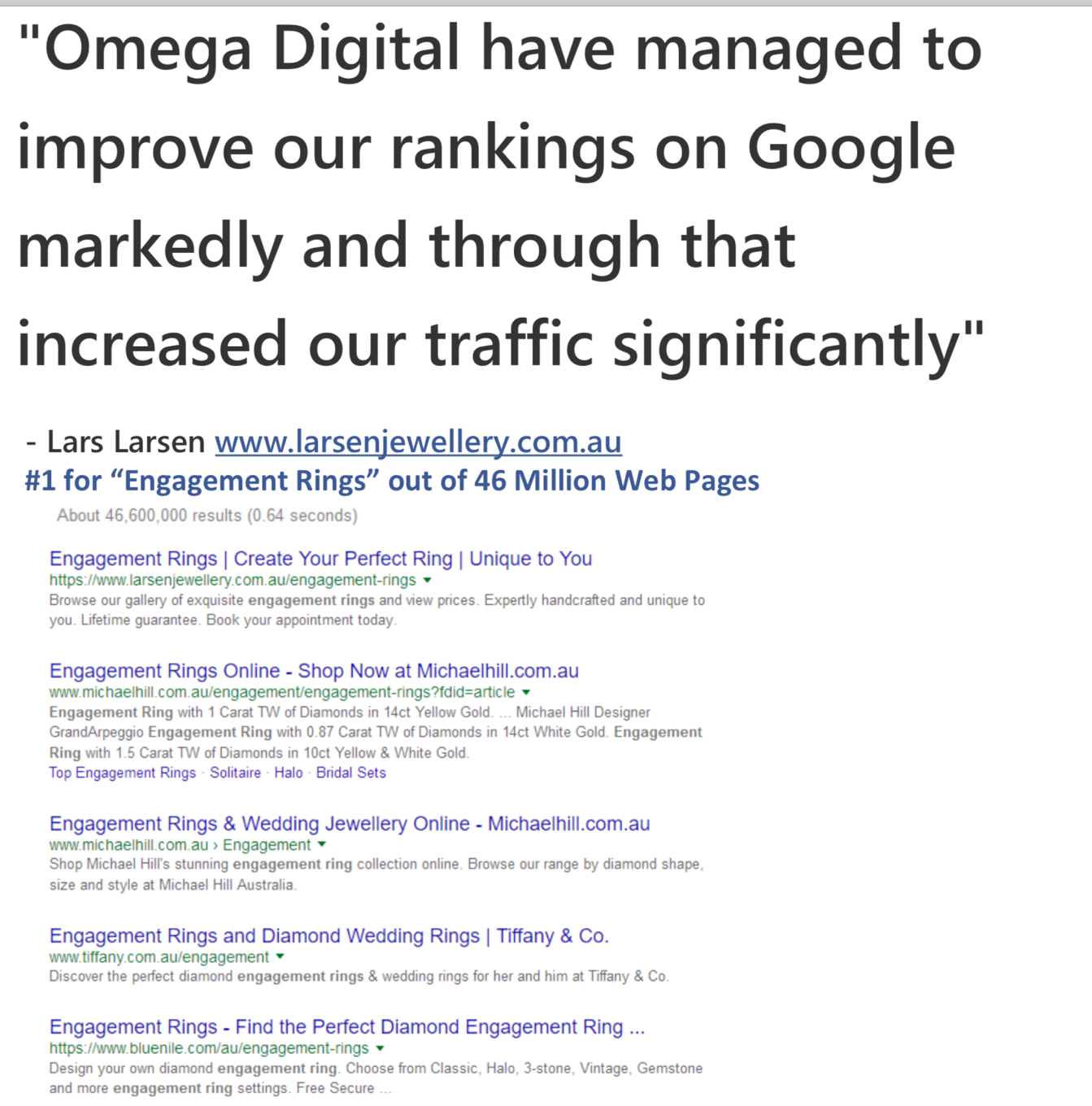
I’ve seen this in jewellery as well.
Around 2018, I was telling a jewellery client: we need to start filming and documenting the rings. Give each ring a story. Let people see what goes into creating it.
We were doing well in search, but there was an opportunity to do much more on social.
The resistance was that it didn’t fit the brand. Having someone in front of a camera talking about an engagement ring wasn’t what they did.
Honestly, I find that mind-boggling.
You don’t need to be rude or do something crazy for attention. But what are you worried about? Showing a human side? Letting people see the work? Being a little bit funny?
I’ve watched jewellery brands build audiences through their dedication to storytelling and documenting what they do. People get an insight into the business. They connect with the people and the stories behind the rings.
When you’re at the top, the biggest enemy is complacency. The biggest enemy is being comfortable.
“We’ve never had to do it before” isn’t a reason to stop adapting.
People want real, raw, authentic content. It doesn’t need to be polished.
For crying out loud, you can film it on your phone. You can buy a little microphone if you want to. You’ll get better at filming, lighting and editing as you go.
Just get it off the ground.
Truth be told, you can do this on your own. It’s whether you want to invest the time and whether you believe in it.
Start documenting. Start explaining. Start thinking about how the same story can help someone on social and someone searching on Google.
Then, once you’ve got that foundation, email me and ask me: “What’s next?”
I’m interested in helping you get to that point.
And I’m taking my own advice. I’ve recorded this episode, I’m getting it edited, and we’re turning the conversation into content for the website.
That’s the small business influencer mindset. Search and social working together, built around what you know and what you do every day.