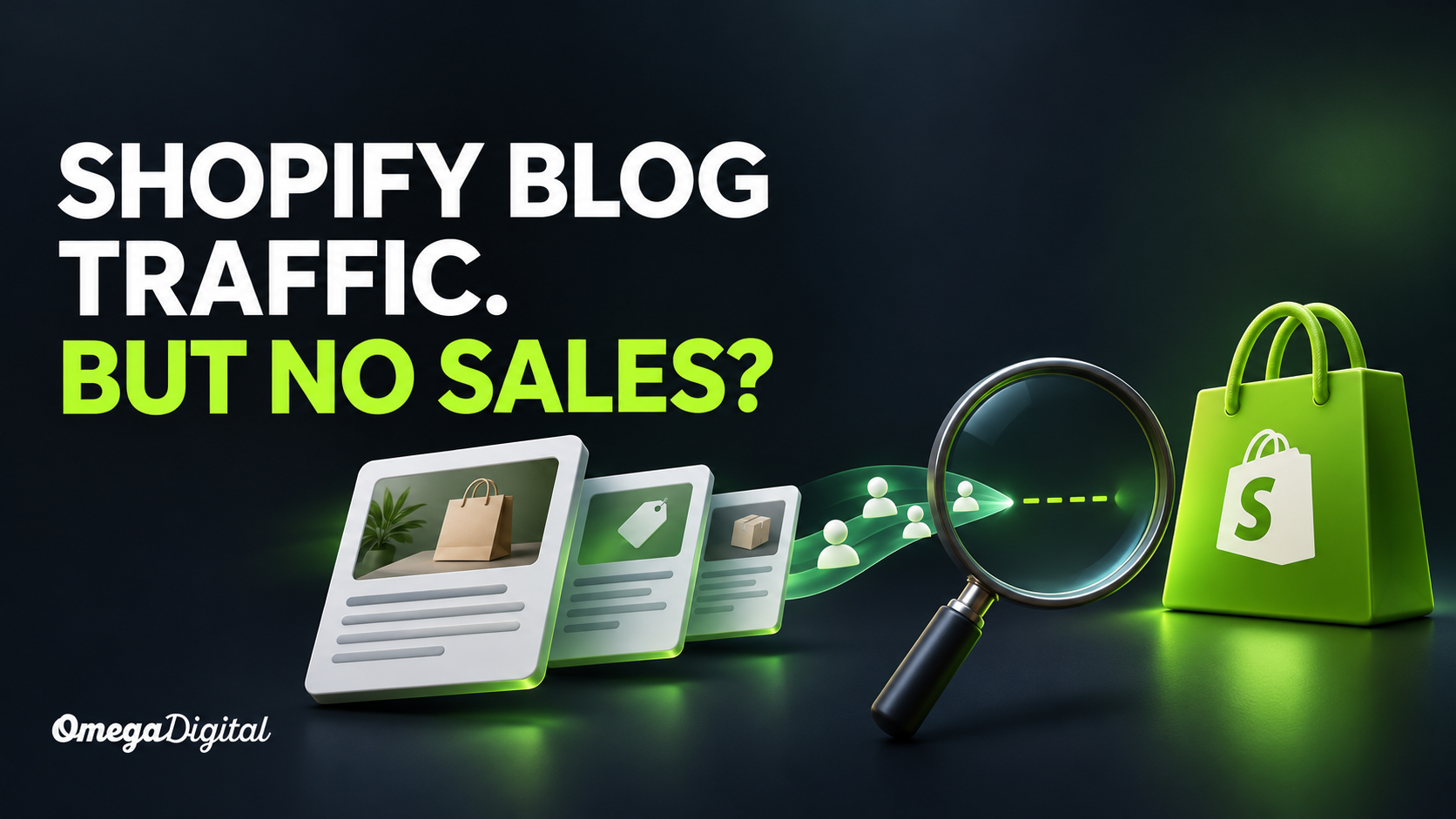
Your Shopify store has an advice section. Your team researches topics, writes articles and keeps older posts updated.
It takes a considerable amount of work.
But when someone asks how much revenue it generates, the answer is uncomfortable: “We can’t see any.”
Before committing to another content calendar, you need to understand what is happening. Are the articles attracting the wrong visitors? Are readers struggling to find relevant products? Or is your reporting overlooking a contribution that happens before the final purchase?
A useful Shopify content audit connects what people search for, what they read and what they do next. It should give you a clear decision about where to invest, what to improve and what to stop.
There are several possible explanations. They require different fixes, which is why “publish more content” is a poor starting point.
A topic can be relevant to your industry without being relevant to your customers.
Imagine a jewellery store publishing an article about the most expensive diamonds in history. It might attract curious readers around the world. That does not necessarily mean those visitors are shopping for an engagement ring in Australia.
An article explaining how to choose a setting for an active lifestyle addresses a different need. It helps someone make a purchase decision and gives the retailer a natural opportunity to introduce suitable products.
Both articles could have a role. They should have different objectives and measures of success.
For every topic, ask: Who needs this advice, and how does that need relate to something we sell?
An article might answer a question thoroughly, then leave the reader with nowhere useful to go.
A generic “Shop now” button is often too broad. Someone reading about ring settings may need a comparison, examples of suitable designs or an invitation to ask a jeweller about their options.
The next step should follow naturally from the question you have just answered.
Depending on the article, that could mean linking to a relevant collection, showing a product example, offering a buying guide or inviting an enquiry.
A reader could discover your business through an advice article, return later through another channel and then purchase.
That is a hypothetical customer journey, but it illustrates why checking only immediate purchases can leave questions unanswered.
Shopify offers marketing reports with attribution options. GA4 also has attribution reporting, and credit assigned to channels can vary with the model and reporting scope. Neither should be treated as a complete record of every customer interaction.[1][2]
Check purchase tracking first. Then examine article landing sessions, movement towards products and recorded purchase journeys where the available data allows it.
Zero recorded revenue is a finding to investigate. It is not, by itself, a complete diagnosis.
Your advice might help visitors choose a product, only for the buying journey to lose them later.
A product could be unavailable. Delivery costs might be unclear. Product information might leave important questions unanswered.
If readers move from articles to products but rarely progress further, investigate that part of the journey before rewriting the entire blog.
“We publish four articles a month” describes output.
It does not explain which customer problem those articles solve, which products they support or why those topics deserve the budget.
Sometimes the most valuable content work is improving an existing guide, combining overlapping articles or adding useful advice to a collection page.
The right recommendation should come from the evidence.
An agency should explain the commercial purpose of its analysis and the decisions it will help you make.
| Area | What to investigate | Decision it should support |
|---|---|---|
| Measurement | Purchase tracking, revenue data and reporting limitations | Whether the current performance picture is reliable |
| Search demand | Queries, landing pages and customer intent | Whether content attracts commercially relevant visitors |
| Content quality | Accuracy, usefulness, originality and overlap | Which articles deserve investment |
| Customer journey | Article links, product discovery and buying friction | Where readers need better support |
| Technical SEO | Indexing, internal links, canonicals and site structure | Whether technical issues limit discovery |
| Commercial priorities | Product relevance, availability, margins and business goals | Which opportunities matter most |
Search Console helps identify the searches and pages producing visibility and clicks. It needs to be considered alongside analytics and store data when assessing sales performance.
The deliverable should be a prioritised action plan, with an explanation of the evidence, expected benefit and effort involved.
For this problem, look for an ecommerce SEO and analytics specialist with Shopify experience. Depending on the findings, you may also need conversion optimisation or development support.
A content writing service alone may have too narrow a scope if the underlying issue involves measurement, technical SEO or the purchasing journey.
Before hiring anyone, ask:
Look for specific answers, relevant evidence and a willingness to explain uncertainty.
An agency should be able to tell you when the data does not yet support a conclusion.
At Omega Digital, we start with the business objective and examine the search visibility, technical foundations, content and customer journey supporting it.
For a Shopify store with a labour-intensive advice section, the first question is straightforward:
What evidence connects this work to the products you need to sell?
We look at what people are searching for, which pages attract them and whether those pages help them move towards a relevant commercial outcome.
That analysis informs the next step. It might be improving existing articles, strengthening links to collections, resolving technical problems or addressing gaps in measurement.
You should leave the review understanding why each recommendation matters to your business.
Talk to Omega Digital about reviewing your Shopify content.
Choose measures that match each article’s purpose.
For advice designed to support buying decisions, review relevant search traffic, clicks towards products or collections, enquiries and purchases where they can be measured reliably.
For broader educational content, set a clear reason for maintaining it. That could include answering recurring customer questions or supporting brand discovery. Those benefits need their own evidence.
Use engagement and product clicks as diagnostic signals. They help explain behaviour, but they do not establish profitability.
Where sales volume allows, compare revenue and contribution margin with the cost of producing and maintaining the content. Allow for seasonality, promotions and changes in product availability when assessing results.
Your advice section deserves the same commercial scrutiny as the rest of your marketing.
Before commissioning another batch of articles, establish what the existing content does, where the journey breaks down and which changes have the strongest business case.
Sources: